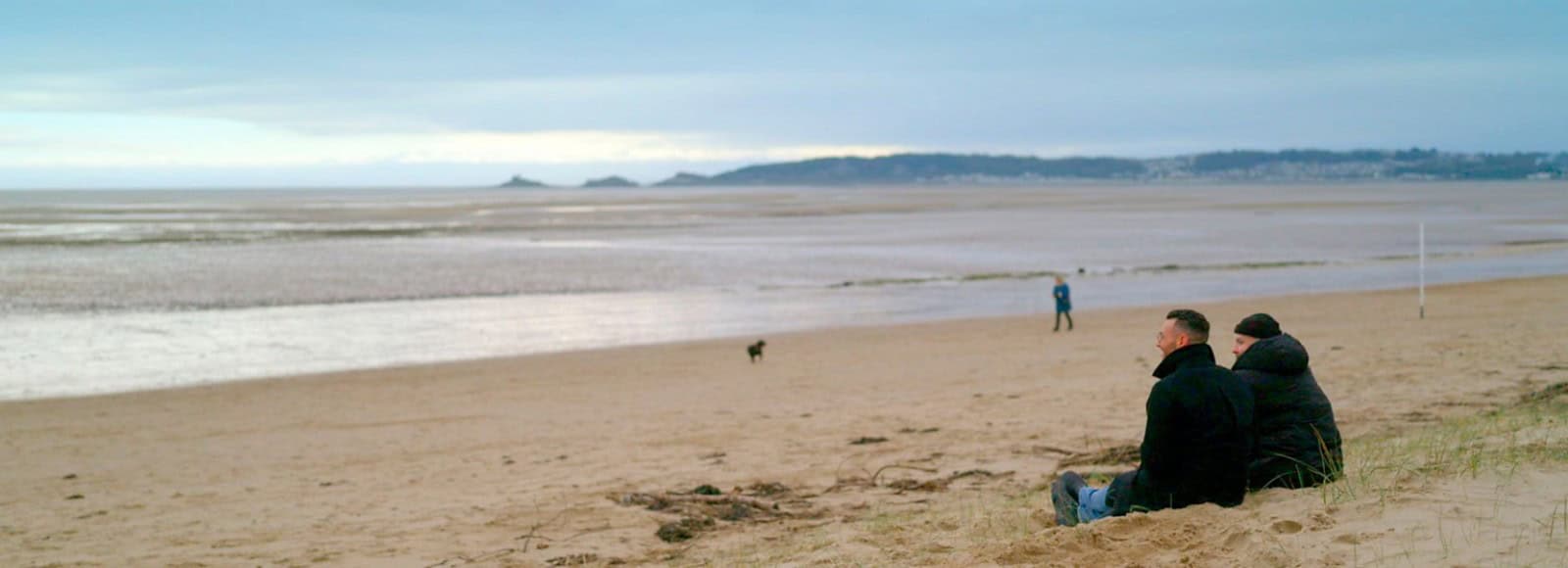

Matt and Emma Willis bring together a team of leading therapists who’ve agreed to open the doors to their work, in this new series for BBC One. Following people across the UK as they confront the problems they face, it explores if therapy can help transform their lives. Full of tips on how to tackle everyday challenges, Change your Mind, Change your Life reveals the power of opening up.
With almost three-quarters of UK adults experiencing recent feelings of anxiety, episode one shows that change is possible. Therapist Owen O’Kane tells us, ‘You’re not stuck with the brain you’ve got.’ First to see Owen is Nicole who wants to tackle her fear of driving. Psychiatrist Steve Peters works with ex-athlete James whose dreams were shattered by sudden illness. And Psychologist Fatoumata Jatta helps Muna who is terrified of being left alone. Back at home in their everyday lives, they are visited between sessions by Matt and Emma to see how things are changing.
Interview with Matt and Emma Willis
In your own words, tell us about Change Your Mind, Change Your Life?
Matt: In Change Your Mind, Change Your Life, we’re basically peeping behind the curtain of real people having therapy sessions. There’s discreet cameras everywhere so the people in the room don’t feel like they’re being watched and we as a viewer really get to see what’s happening in a session like this. Breaking down what happens in therapy, trying to destigmatize it a bit and actually say what therapy is and what therapy isn’t while going through peoples real journeys with them. Watching them go into their first session and seeing how that evolves is an incredible process.
Emma: It’s also showing what a difference talking makes. Being able to talk and open up and let everything out that is stuck in you, what that process is like and the difference it can make at the end of it by something as simple as talking.
What was it about the idea of this series that sparked your interest?
Emma: Our love of therapy! I think we’ve both experienced first hand the effects that it can have. For us, we’re huge advocates of therapy, if it’s accessible to you, or simply talking or finding tools or tips and tricks that can help you. Hopefully that’s what this series will be. All of those things to people who are viewing it and feel like they might need it. Even the people that aren’t aware that they need it, maybe they’ll watch something in the show and it will just trigger a ‘Maybe I should look into this.’
Do you think your own experiences helped with your approach to the show?
Matt: I think so, I think we could resonate with them because we’ve been through a journey and an experience. I’ve had quite a lot of therapy in my life and it’s been transformative for me. It’s also knowing the work is outside the room as well. Talking to these people and seeing what they’re going through, I suppose being someone who’s gone through it was kind of reassuring to them. They kind of go ‘Oh look, this does have an effect and this does work’ it might take some time or it might happen really quickly.
Emma: I suppose it was easier for them to open up to us when they know we’ve also experienced it. Obviously circumstances are always different but it can be a really sensitive subject to a lot of people. A lot of people either don’t want to admit it or don’t want to talk about it, they want it to be a very private thing. As it should be if that’s what you want, but obviously the people we have in the show were very open to doing it publicly and I think it helped them that we got what they were doing.
Is there a particular story or moment from the show that stood out to you both as being particularly impactful or emotional?
Matt: I had a big moment with all of them, whenever I met them. It’s funny, however you’re coming at it there is a similarity, I think, with all of them. I saw a bit of me in them or I knew where they were coming from in some way, it was incredible to see. Casey, for me, was amazing. He was suffering so badly, it was really affecting his life. The more we were talking the more you could see hope in his eyes and I really felt that from him, he really wanted it, he really wanted to move past this time – it was inspiring.
Emma: I think it’s hard not to be affected by any of them really. Quite a few people I met, a lot of it on the surface was anxiety, and that’s something I’m really good friends with. So you kind of go to therapy thinking you have anxiety about this, that and the other and once you start digging you find out actually that there is a lot more underneath and that’s where it’s all coming from.
Everyone kind of struck a chord in some way. I met James, he was amazing and a lot of what he said I was like ‘Oh i’m like that.’ He’s a perfectionist, he’s a people pleaser, he never wants to let anyone down and because of that, his wanting to do the best for everyone and thinking he’s not good enough actually drove him to have so much anxiety that he couldn’t even leave the house to go to work. So the one thing you think you’re doing to be a good human, to help everybody else, is actually detrimental to yourself. So he really struck a chord, and Phillip as well. He was inspiring and amazing and it felt like the only person who couldn’t see that, was him.
Do you believe this series could help change people’s perceptions on therapy?
Matt: I never want to say what anyone needs but I think, if anything, a lot of people have a certain view on what they think therapy is and in my experience, it’s not that. When people explain what they think it is to me I’m like ‘well that’s not my experience’ and I think that will be interesting for people to see in the series.
What kind of impact do you hope the series will have on viewers? Are there any specific messages or conversations you hope it sparks?
Emma: I think therapy has a certain image. We know it’s not accessible to everybody and that makes it really quite difficult. So if this series can bring that access, or help two people watching or even just get them to start having conversations about how they feel then that’s great.
Yes, it’s great if you can see a therapist but if you can’t, as long as you have somebody that you can trust and you can talk to and you can start letting it out. There are places you can go to find help and help you navigate through things, it doesn’t always have to be in a therapist’s room. Our goal is to help start those initial thoughts and conversations by watching.
Matt: Also just showing people that they’re not alone in these things. A lot of people struggle. Everyone’s got something going on, you never know what’s going on with people and that’s the beauty of this. You can really resonate with someone’s story and go ‘oh, i’m not the only one who deals with that’, in varying degrees.